Reality Hunger
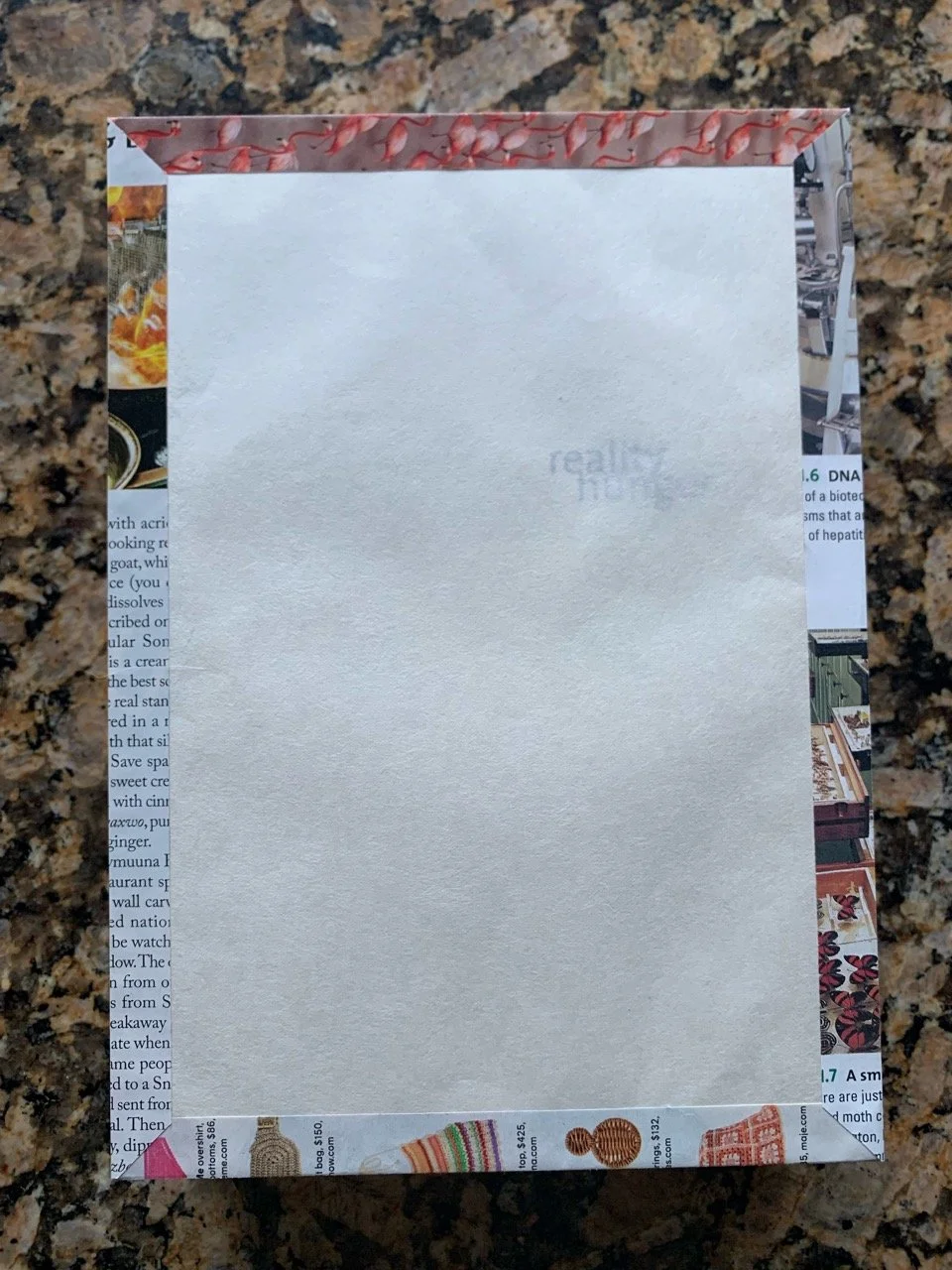
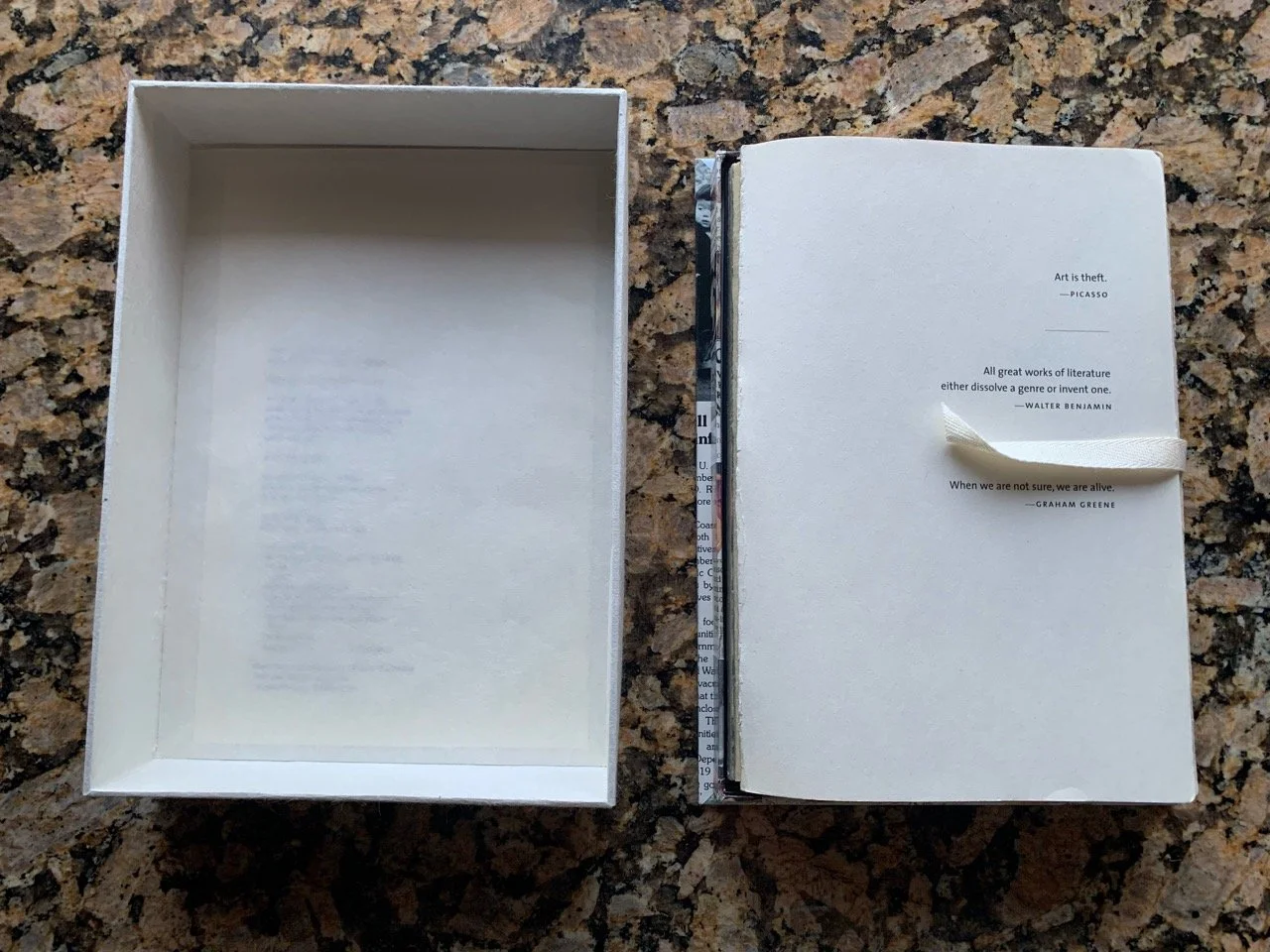
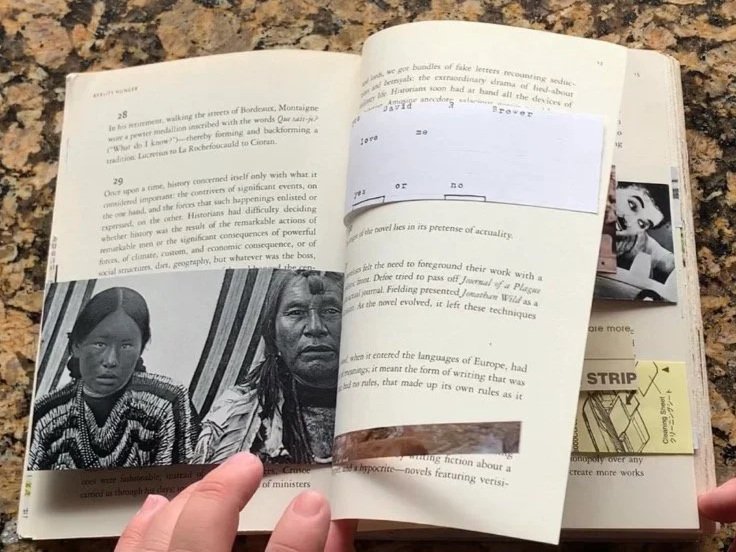
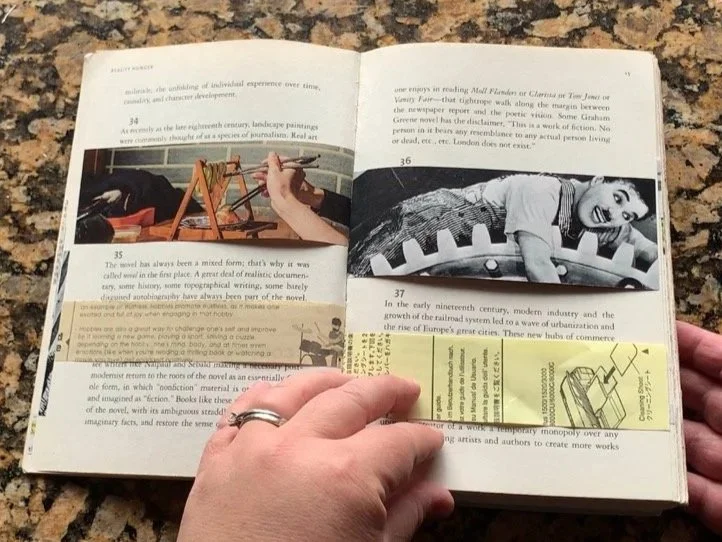
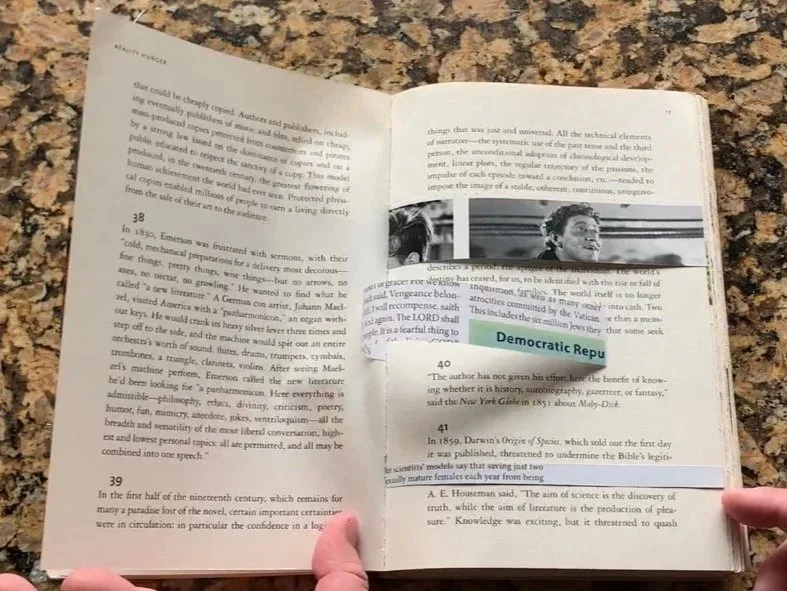
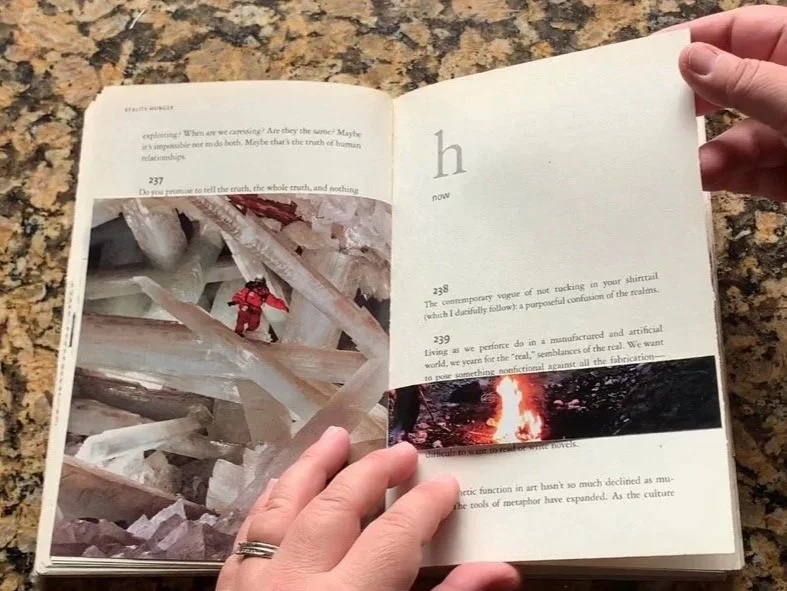
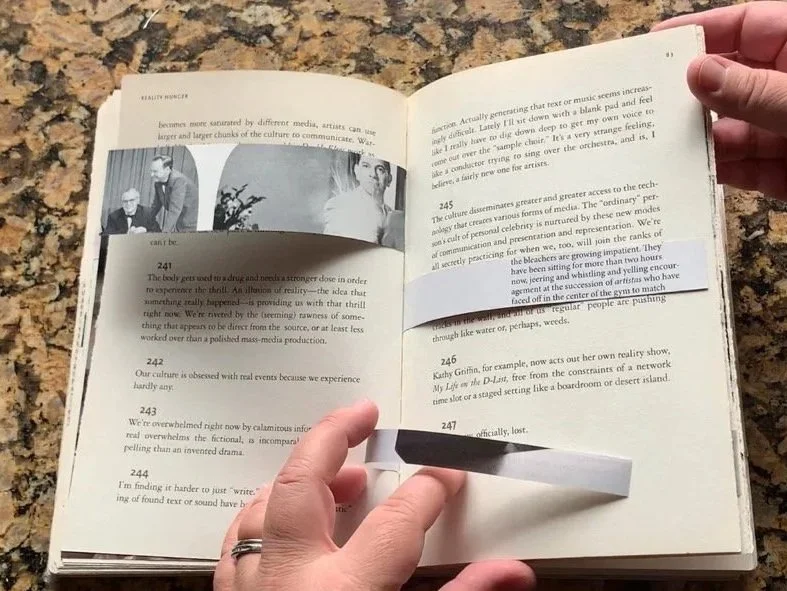
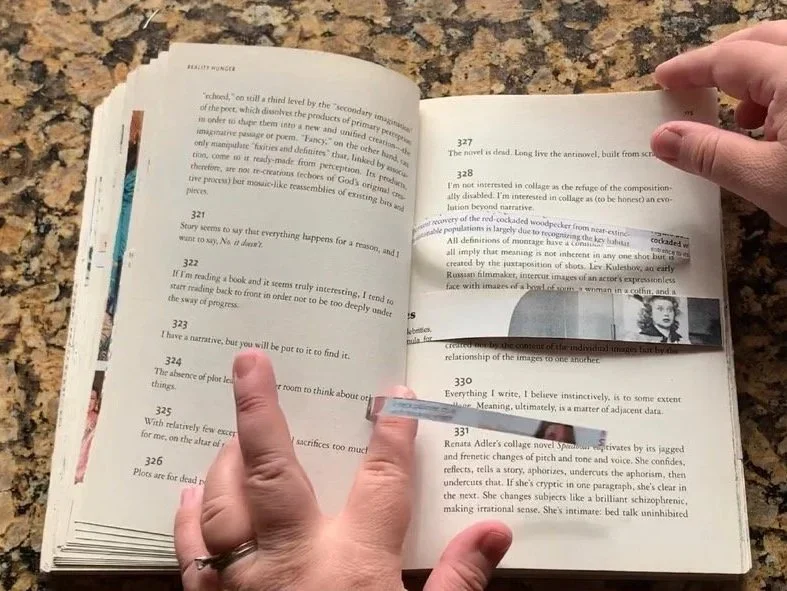
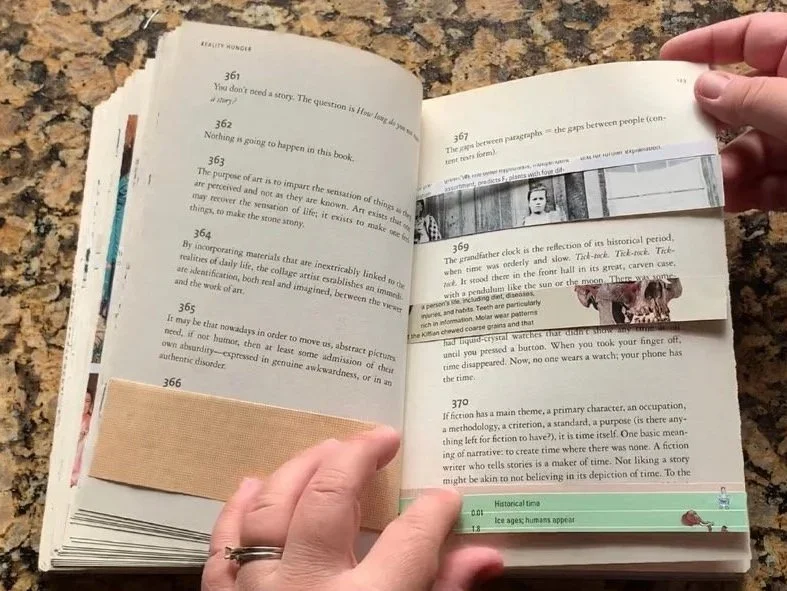
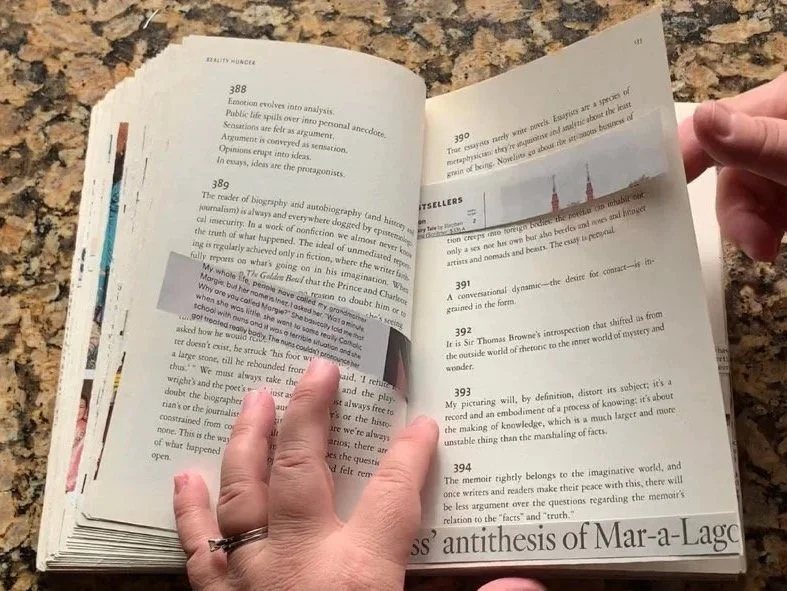
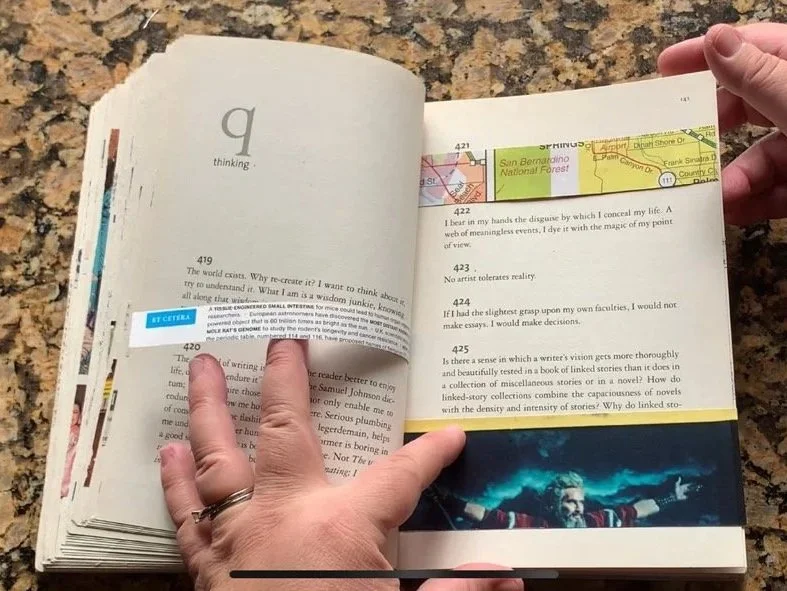
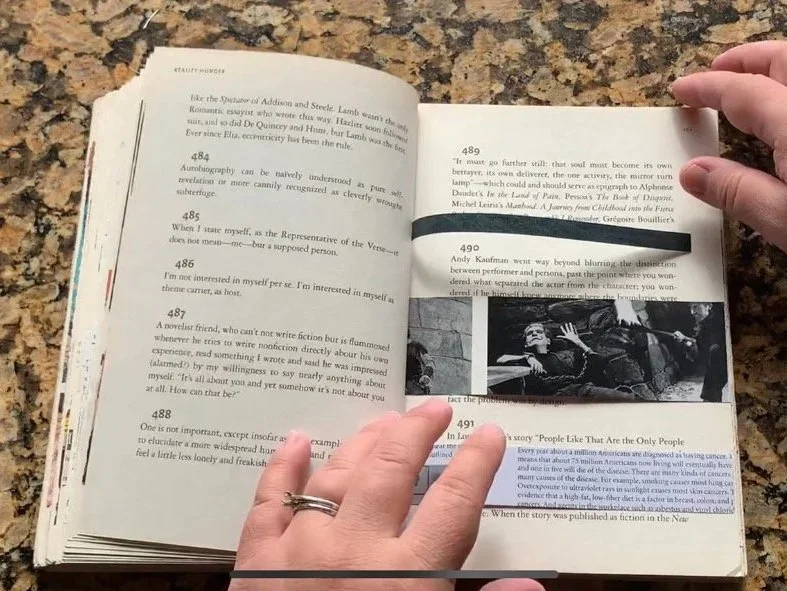
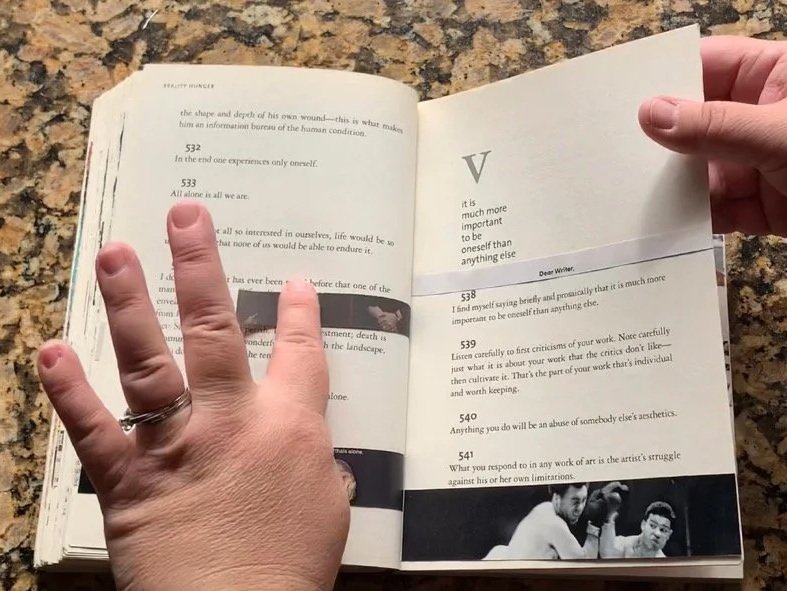
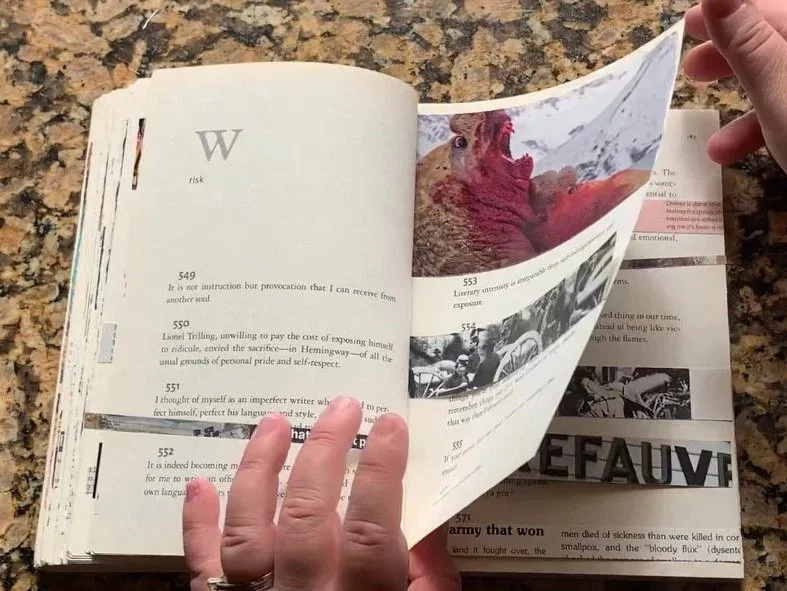
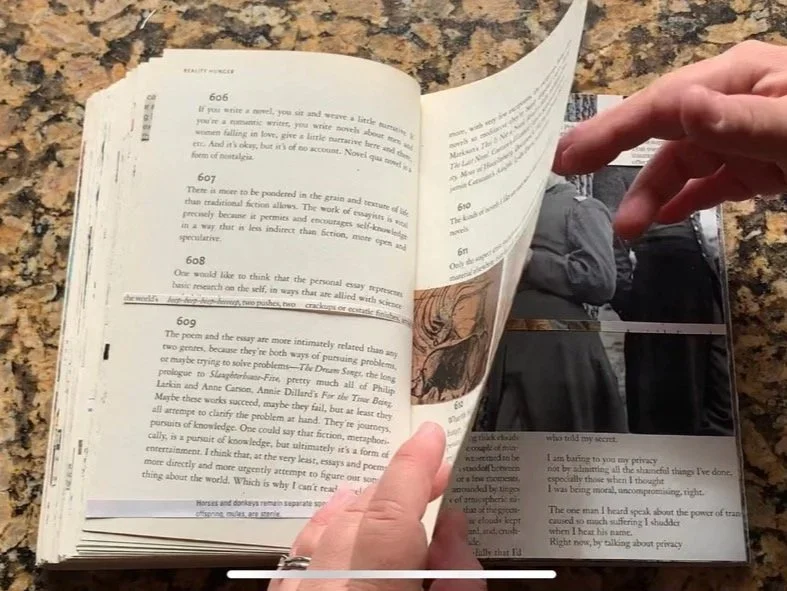
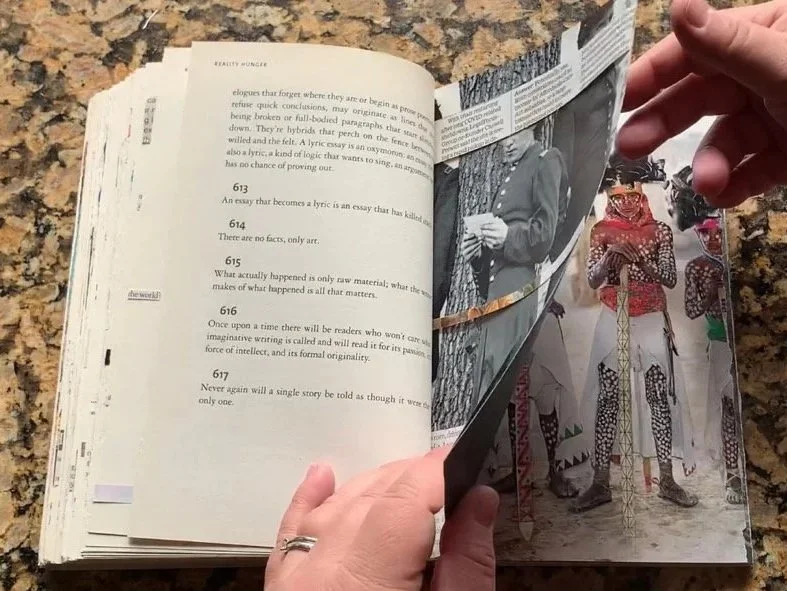
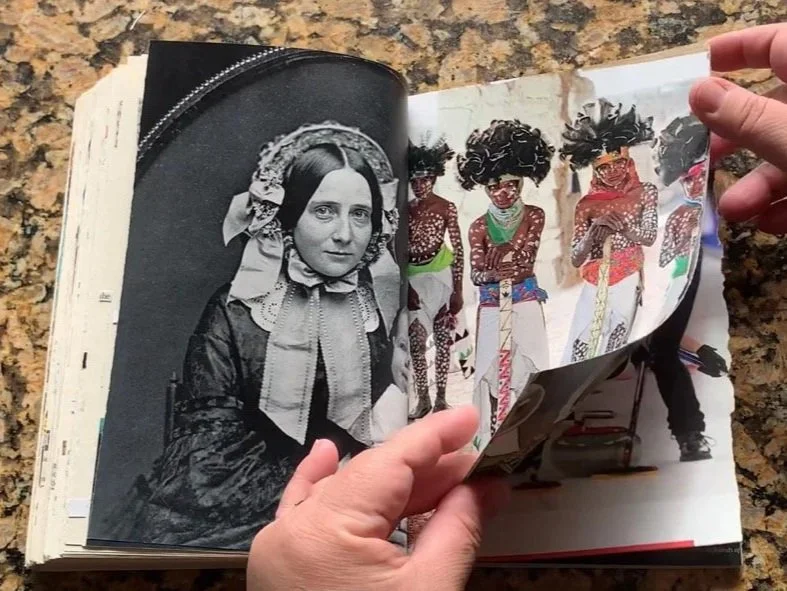
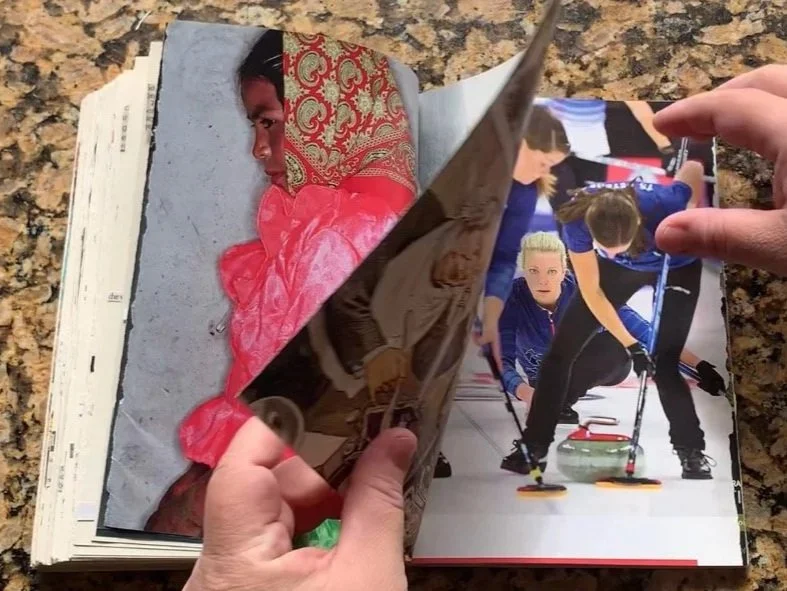
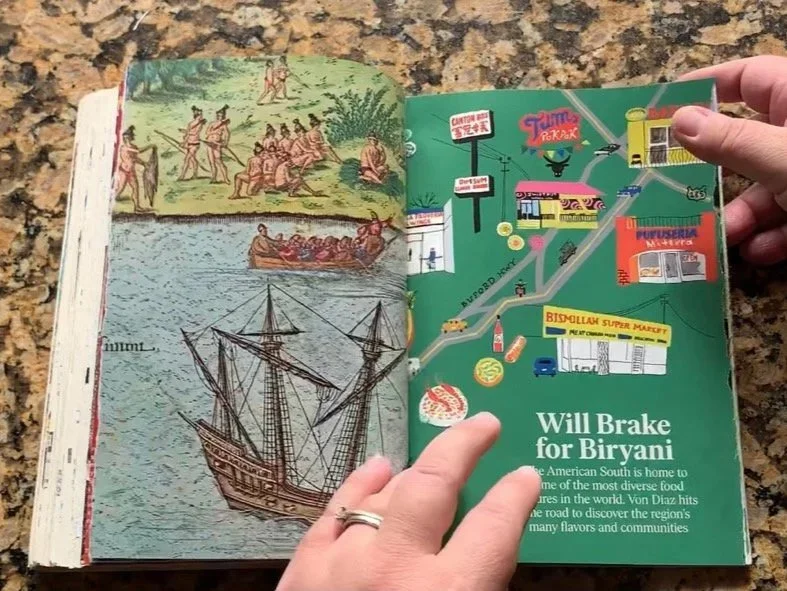
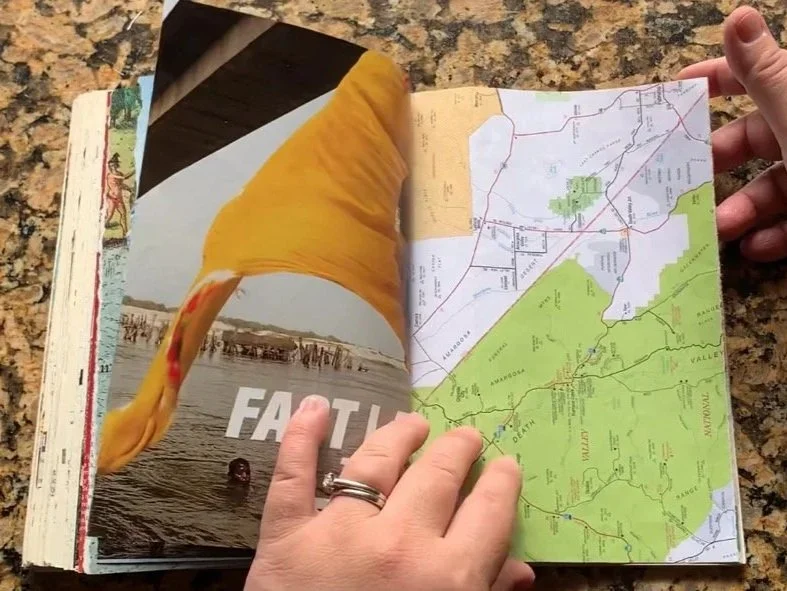
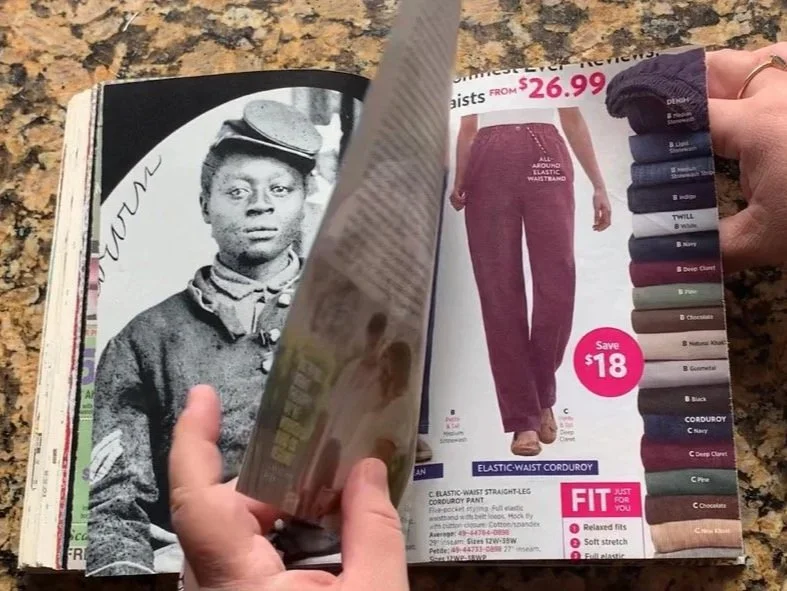
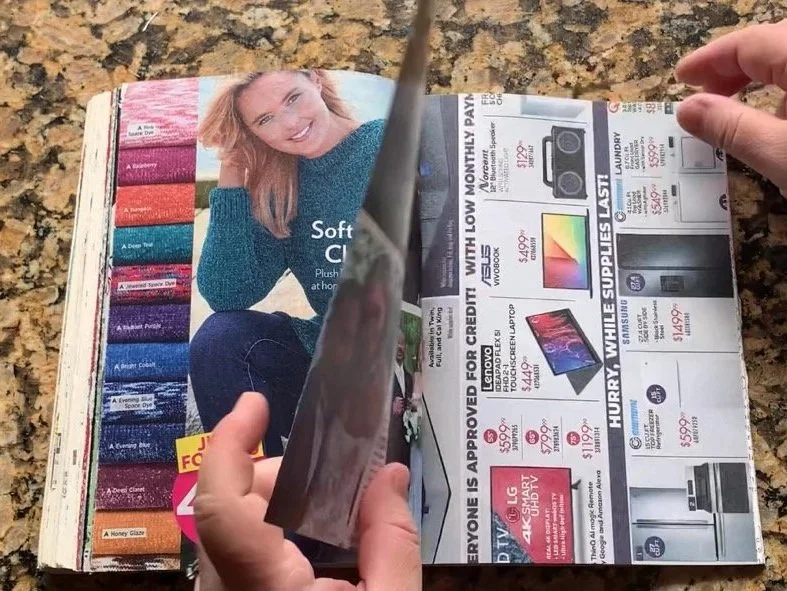
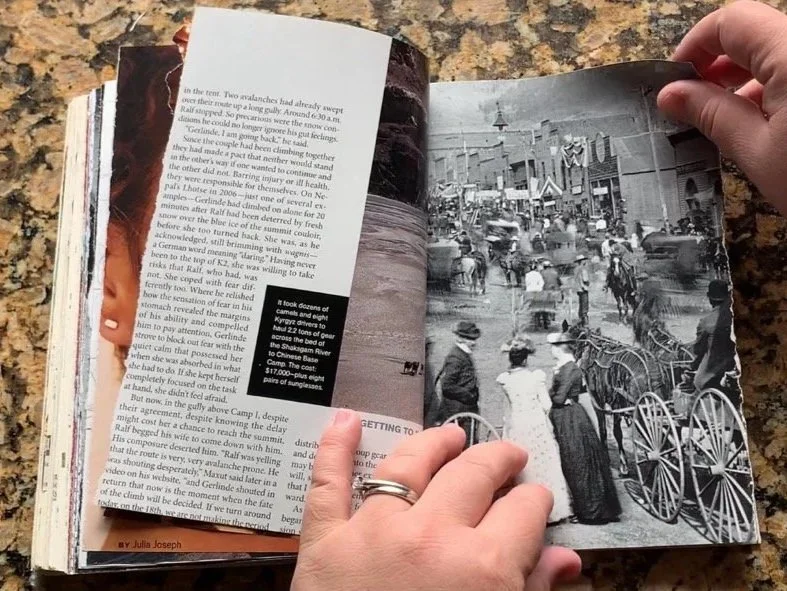
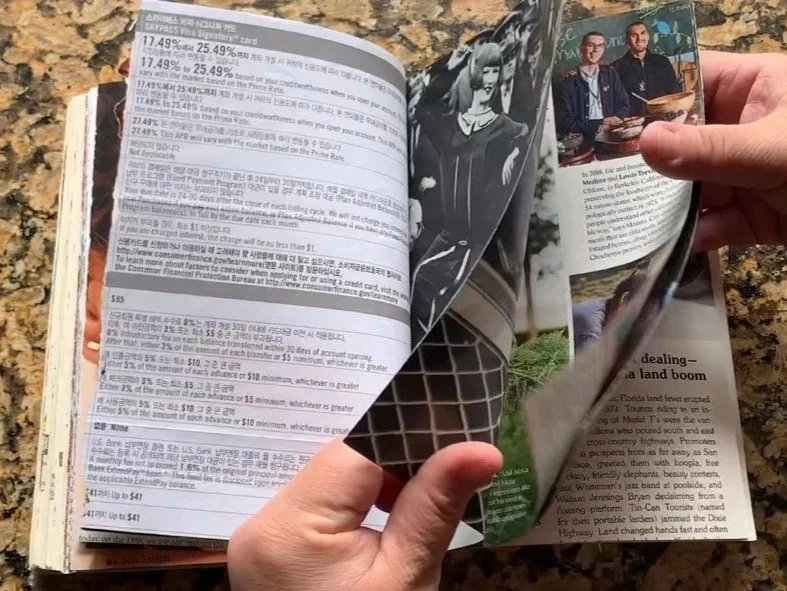
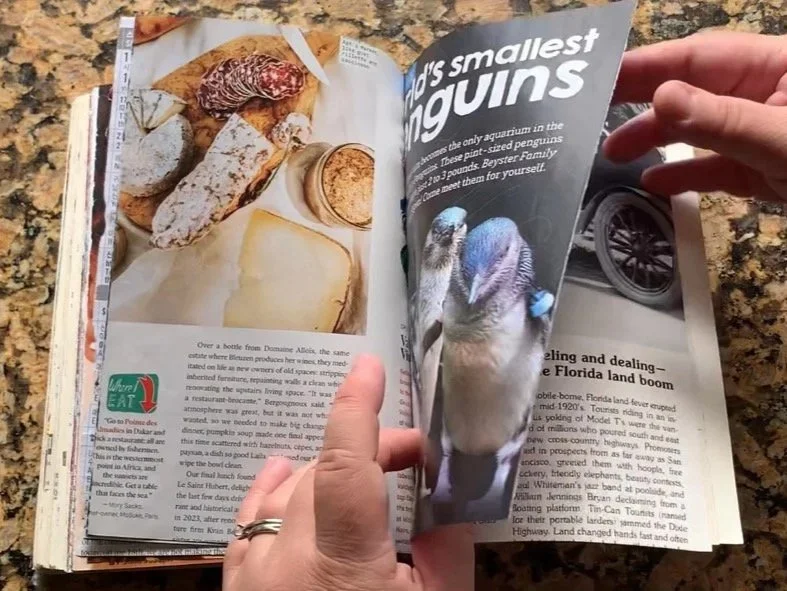
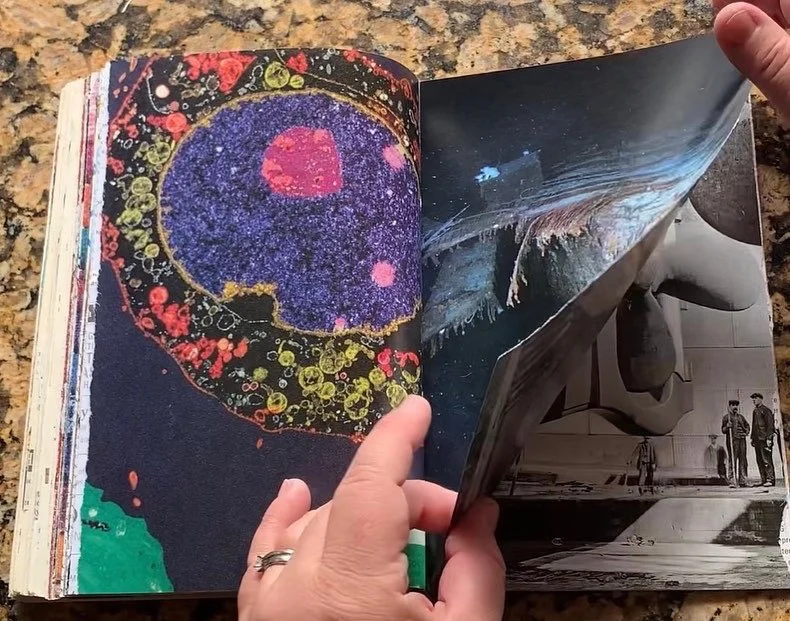
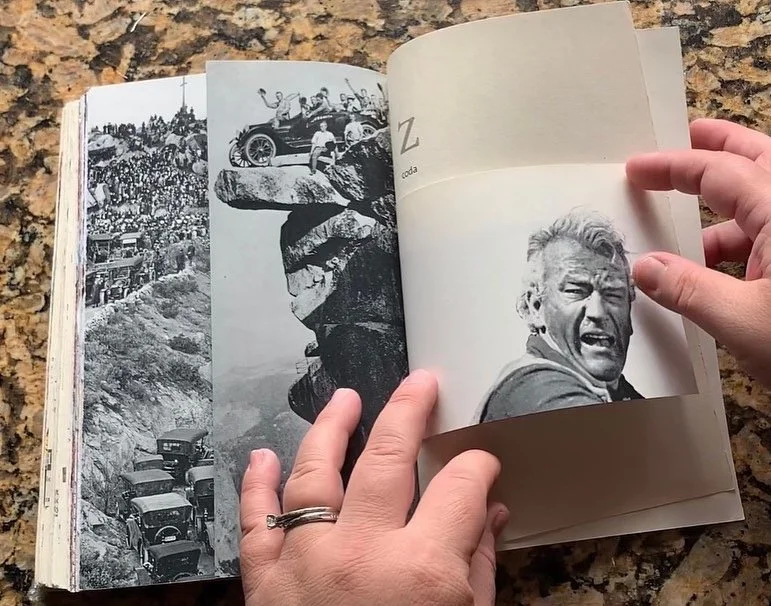
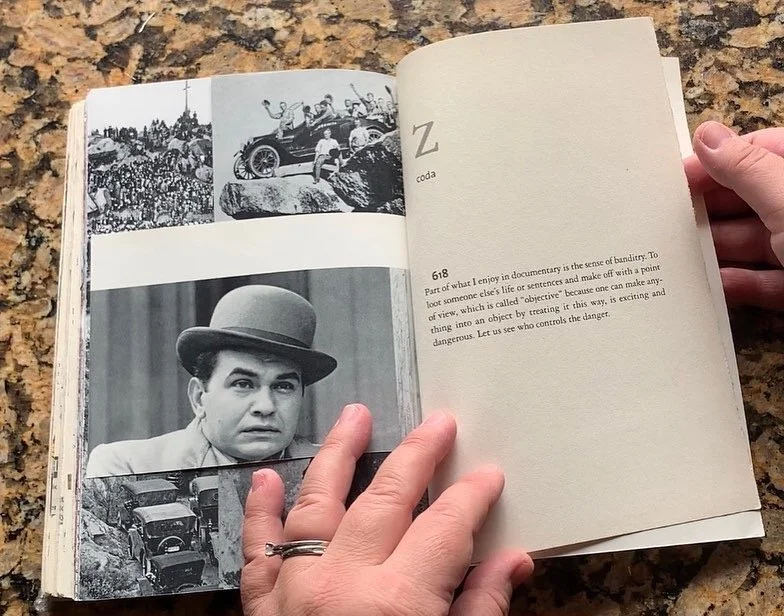
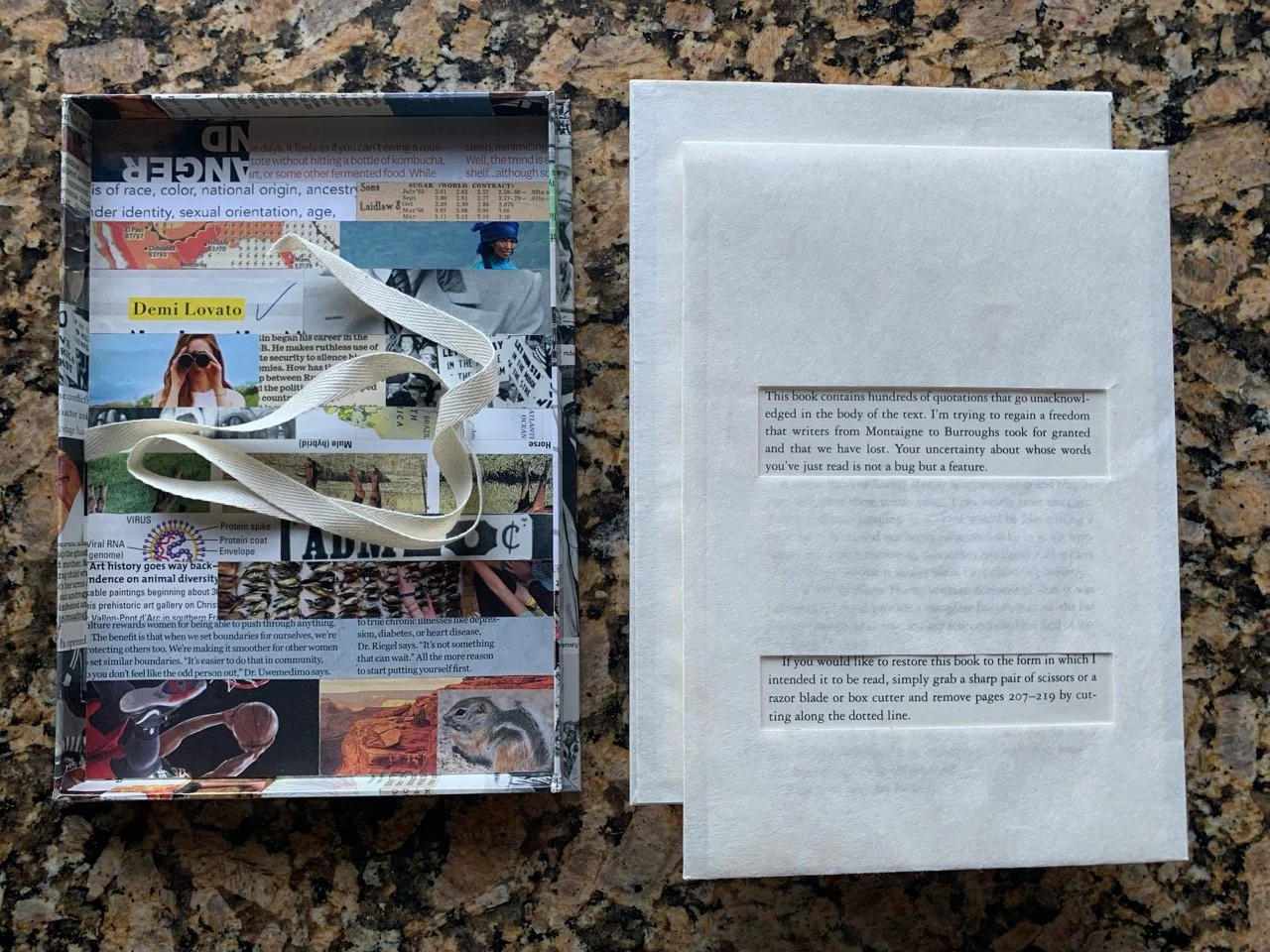
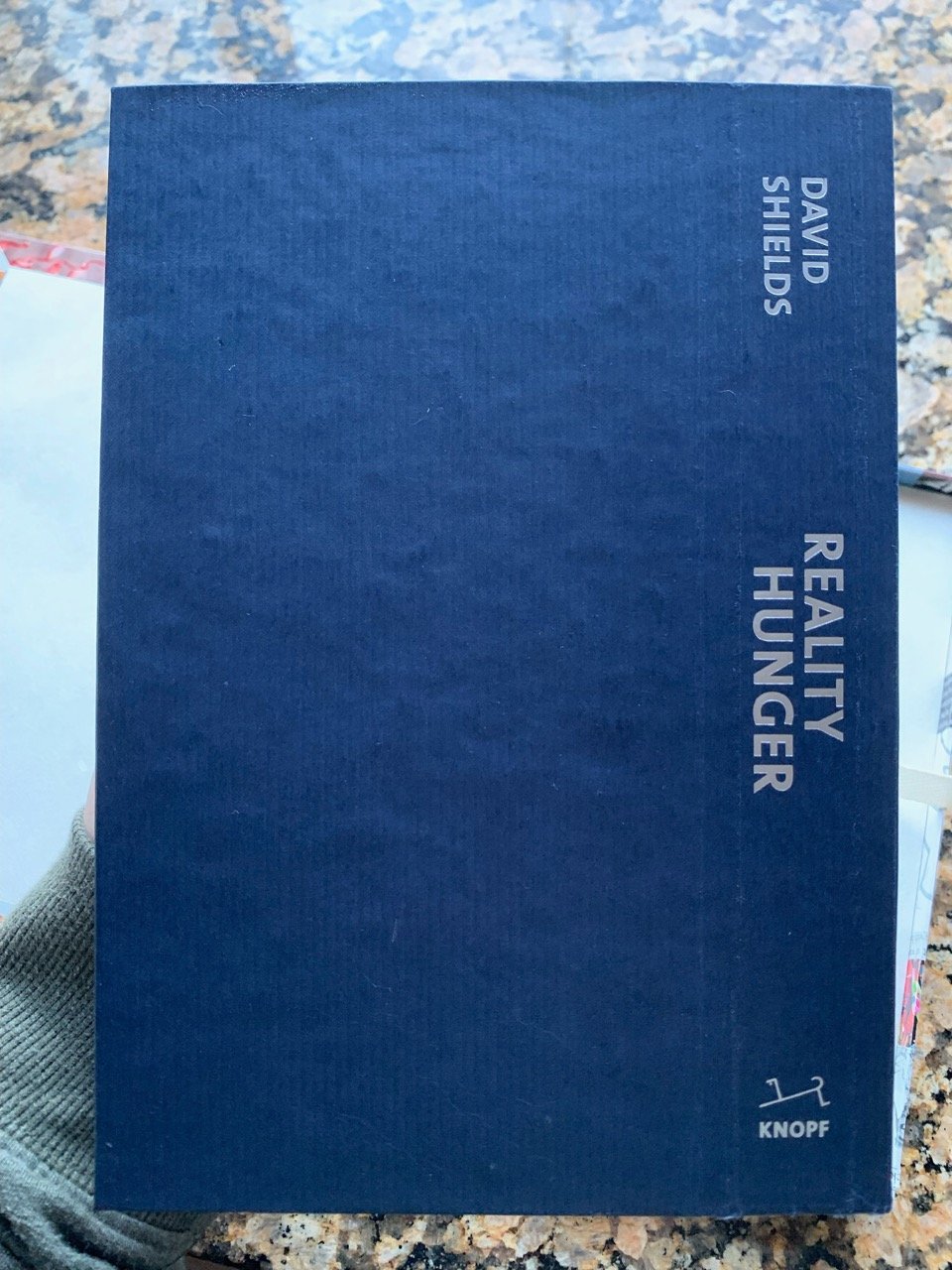
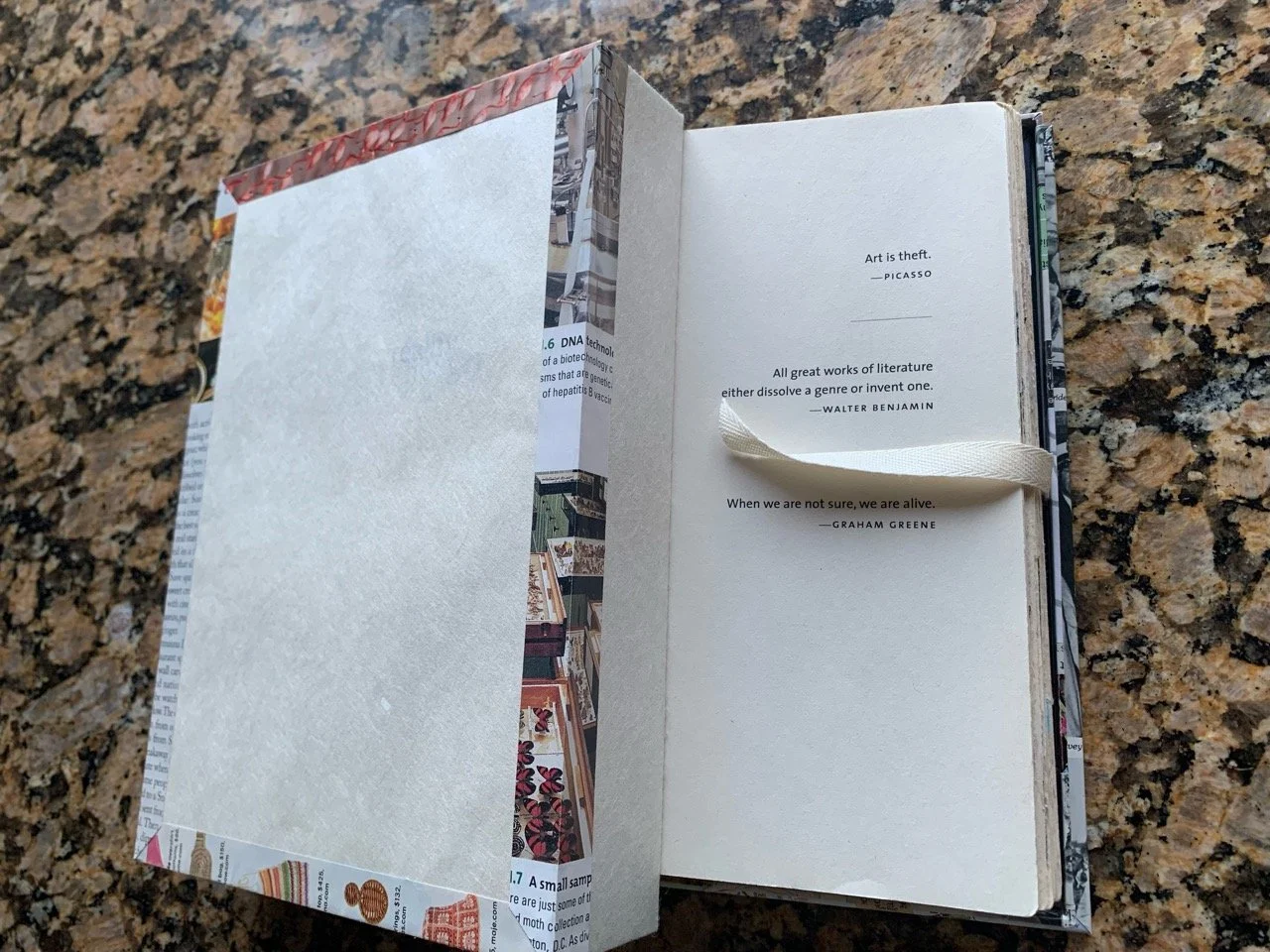
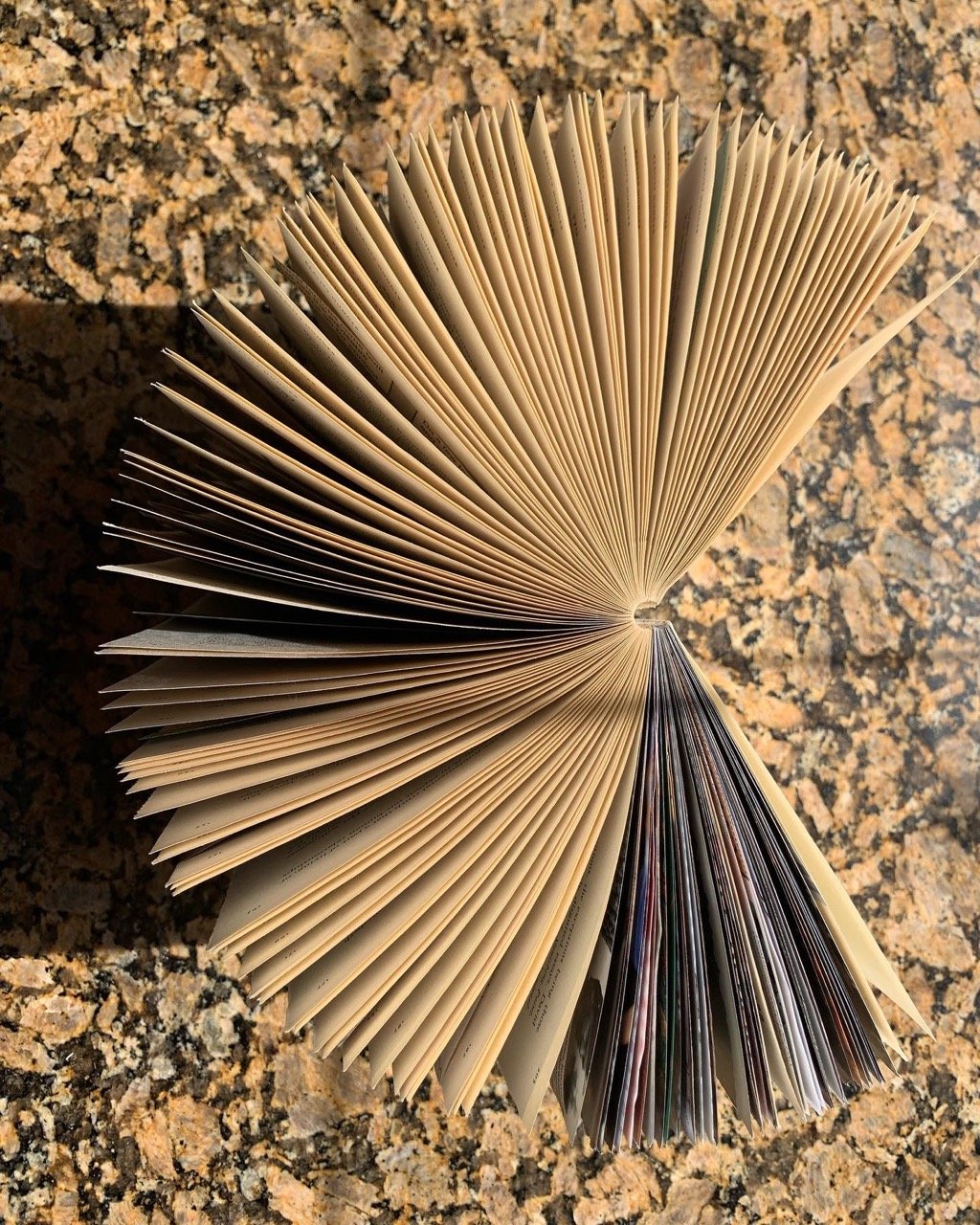
Altered copy of Reality Hunger: A Manifesto, by David Shields (2010), Fragments of magazines, books, advertisements, and images added in response to Shields's text. A handmade collaged box with lid houses both the book and, in a secret compartment, the sources of all David Shield’s sampled excerpts. 2022.
In David Shields’s Reality Hunger: A Manifesto, he writes that “Forms serve the culture; when they die, they die for a good reason; they’re no longer embodying what it’s like to be alive” (p. 111). He argues that by quoting bits of reality, culture, or preexisting work (for example, sampling older songs in hip hop music, collage’s use of found materials, and the essay’s basis in non-fiction), art can more powerfully portray the experience of being alive today and find resonant emotional truth.
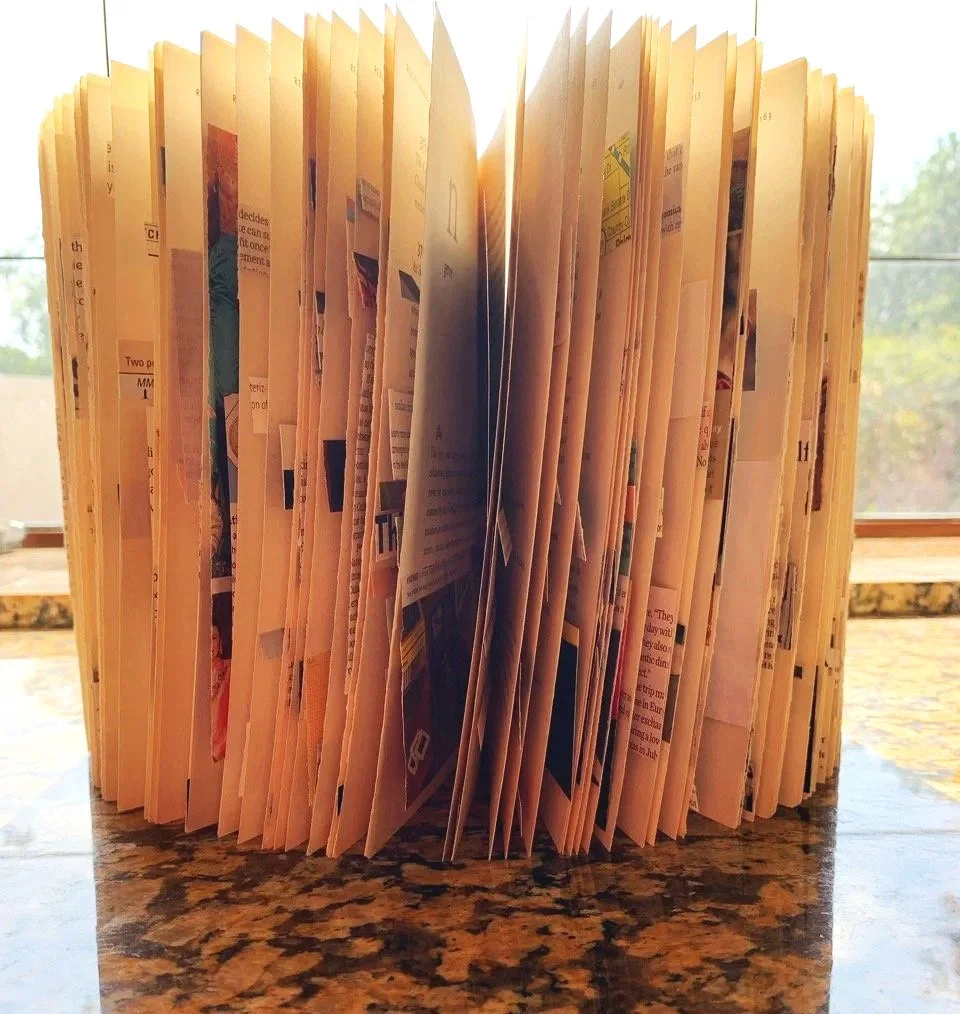
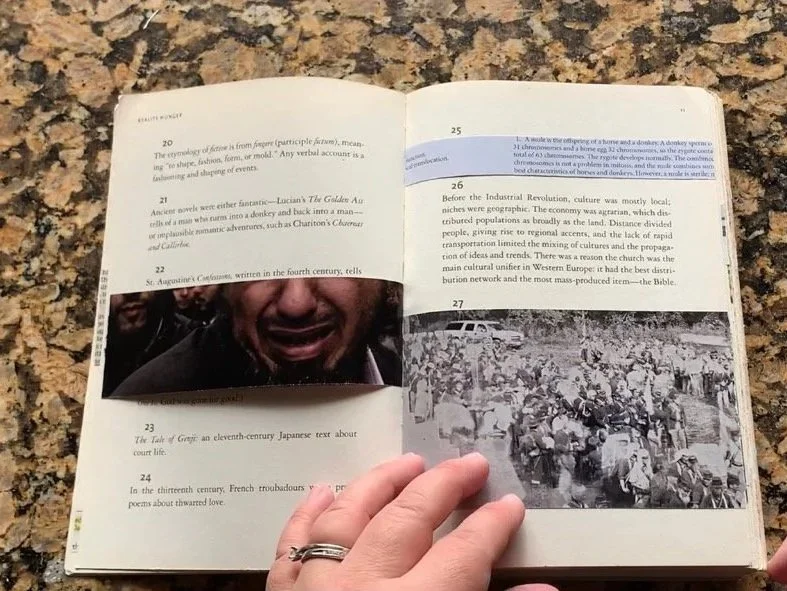
With this idea as a springboard, I inserted bits of “reality” into the book from a wide variety of sources: science articles, trashy magazines, the phone book, advertisements, historical photographs, textbooks, political news, maps, recipes, obituaries, movie stills, children’s drawings. Shields includes a quote about Ralph Waldo Emerson searching for a “new literature” where “everything is admissible—philosophy, ethics, divinity, criticism, poetry, humor, fun, mimicry, anecdote, jokes, ventriloquism—all the breadth and versatility of the most liberal conversation, highest and lowest personal topics: all are permitted, and all may be combined into one speech” (p. 16). I am continually striving to make “admissible" every shred of evidence of what it feels like to live in this time and place.
My deliberately selected and cropped invasions became a conversation with the text—a new layer of thought and meaning to be read with the original text, back and forth, weaving in and out. The added words and images sometimes strategically edit Shields’s text, add context (or misconstrue or feign ignorance), imagine a story beyond the text, act as a punchline, sharp juxtaposition, lens, retort, and, always, tempt the reader to peek at the hidden words under the paper. My only rule was that the additions could not serve as illustration—they had to create an alchemy with the text to form something new and more oblique: a cognitive burst to send the reader over the gap between the two.